
I. What a stern tube seal has to hold
The stern tube seal is the boundary between the sea and the lubricating oil around the shaft. It has to hold that boundary with the shaft turning, with the propeller loading and unloading the oil film, and with the water pressure outside changing every time the vessel changes draft or takes a sea.
On a container ship the draft range is wide and it changes quickly: the seal is asked to work at one water pressure in ballast and another when loaded, and a sealing air pressure that suits one condition is wrong for the other. Air sealing was adopted for this duty because a controlled air pressure in the seal space keeps sea water out of the oil and oil out of the sea, and keeps the lip loading correct as the water pressure moves.
II. What the air control unit costs
The air-sealed stern tube of the conventional arrangement relies on an air control unit: a precision assembly that regulates the flow of sealing air to the seal. It is bought as a unit, maintained as a unit and priced as a unit.
Two problems follow. The first is cost — an expensive item for a function the ship otherwise has the instruments to perform. The second is reliability: when the air system fails, the seal has no independent means of holding the boundary, and the shaft has to be stopped, or the seal run at reduced condition, until the air side is restored.
III. The three units that replace it
The system is built from three units in series: a draft gauge pressure monitoring unit, a valve pressure control unit, and a stern tube seal pressure actuator.
The draft gauge unit reads the draft pressure signal. The valve control unit takes that signal together with the sealing air pressure signal and commands the actuator. The actuator uses its valve group to hold the air pressure and the oil pressure inside the system at their set values.
IV. The actuator and its valves
The actuator contains the sealing air pressure control valve, the header tank pressure control valve, the oil back-pressure control valve, the header tank, the oil pump, the oil chamber and the air sealing chamber. The header tank pressure control valve works on the tank; the pump draws from the tank and delivers through the back-pressure control valve to the oil chamber; the sealing air pressure control valve holds the air chamber against the sea.
The set values follow the draft rather than a fixed figure. The air chamber pressure is set at the measured draft pressure plus a reserved margin; the header tank pressure follows from the air chamber pressure, less the reserved margin and less the outlet pressure that applies when no air is present. Because the reference is the draft the vessel is actually floating at, the seal holds at any loading condition instead of at the one it was adjusted for.
V. When the air side fails
Failure of the air side is where the arrangement pays for itself. The valve control unit takes the air pressure failure signal from the feedback line and, from the draft information, closes down the oil back-pressure control valve. Closing the valve raises the pressure in the oil chamber, and the oil pressure takes over the duty the air chamber was performing, so the seal does not leak when the air pressure is lost.
The vessel continues to run on the oil side until the air system is restored, instead of stopping the shaft.
VI. What it changes, and what it does not
Three things change. The air control unit is no longer needed, and the instrument that does the work — the draft gauge — is already required on the ship. Control of the air and oil pressures is tied to the draft the vessel is actually at, which is the condition that wears the seal ring, so the ring lasts longer. And a failure of the air side no longer means a stopped shaft.
The limits are those of any seal system: the valves have to be set and proved at commissioning, the draft gauge signal has to be available and correct, and the oil side has to be tight. The system removes a purchased unit; it does not remove the need to test.
Photographs
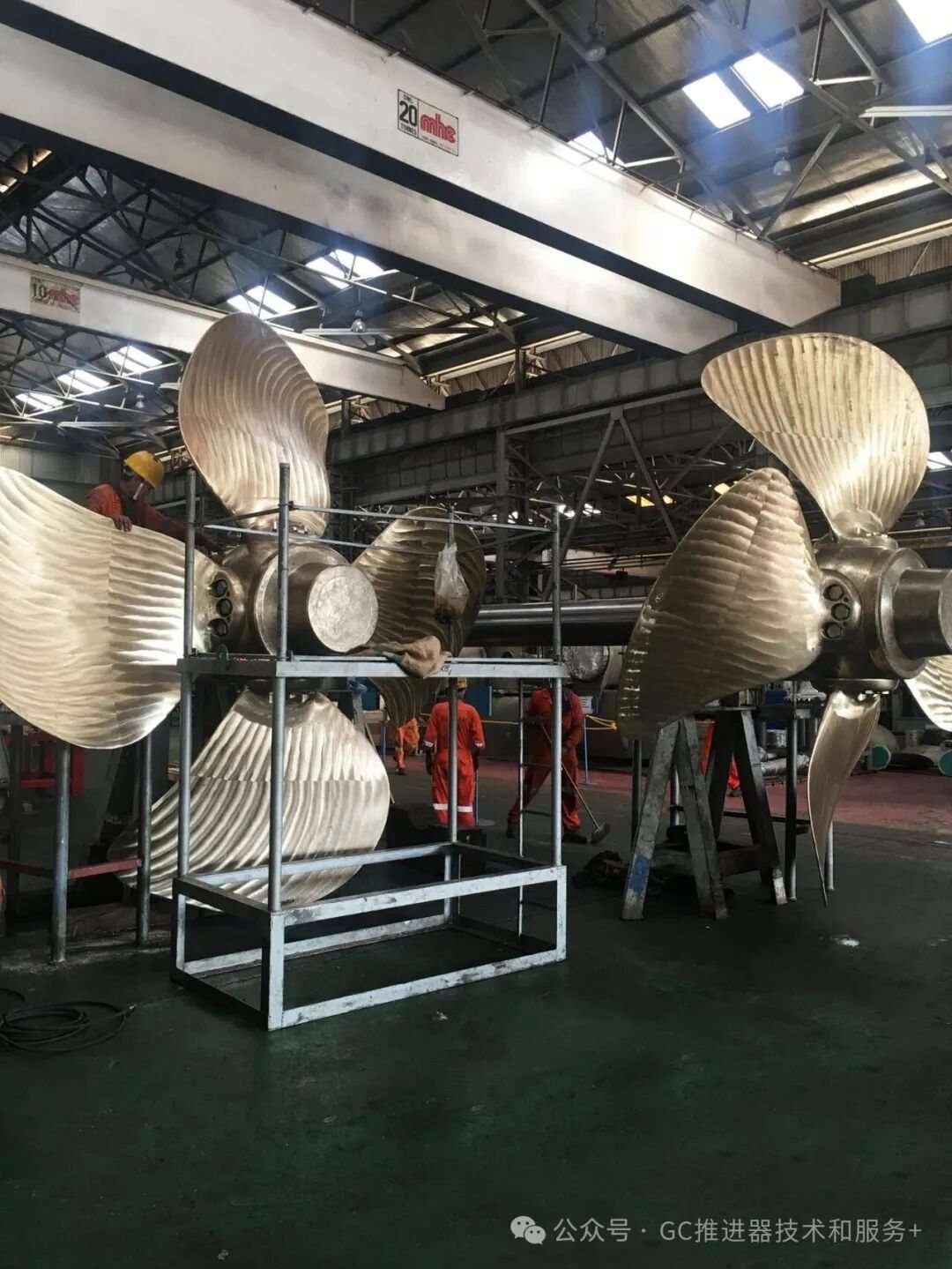
Propeller and hub assembly prepared in the workshop 车间内准备好的螺旋桨与桨毂组件
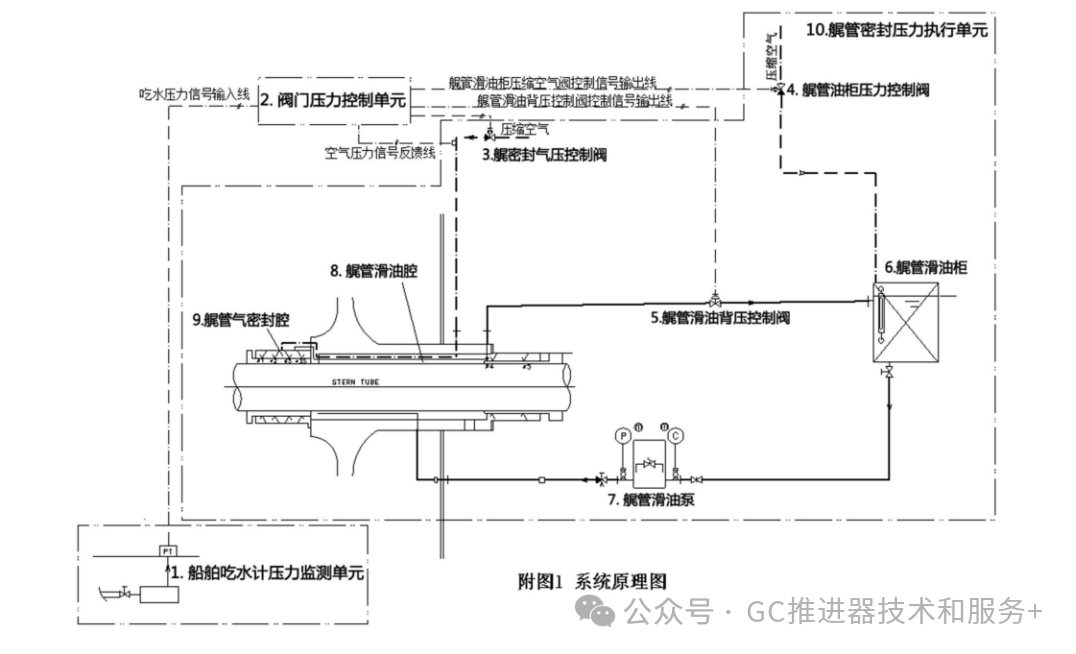
System schematic: draft gauge, valve control unit and seal pressure actuator 系统原理图:吃水计、阀门压力控制单元与密封压力执行单元
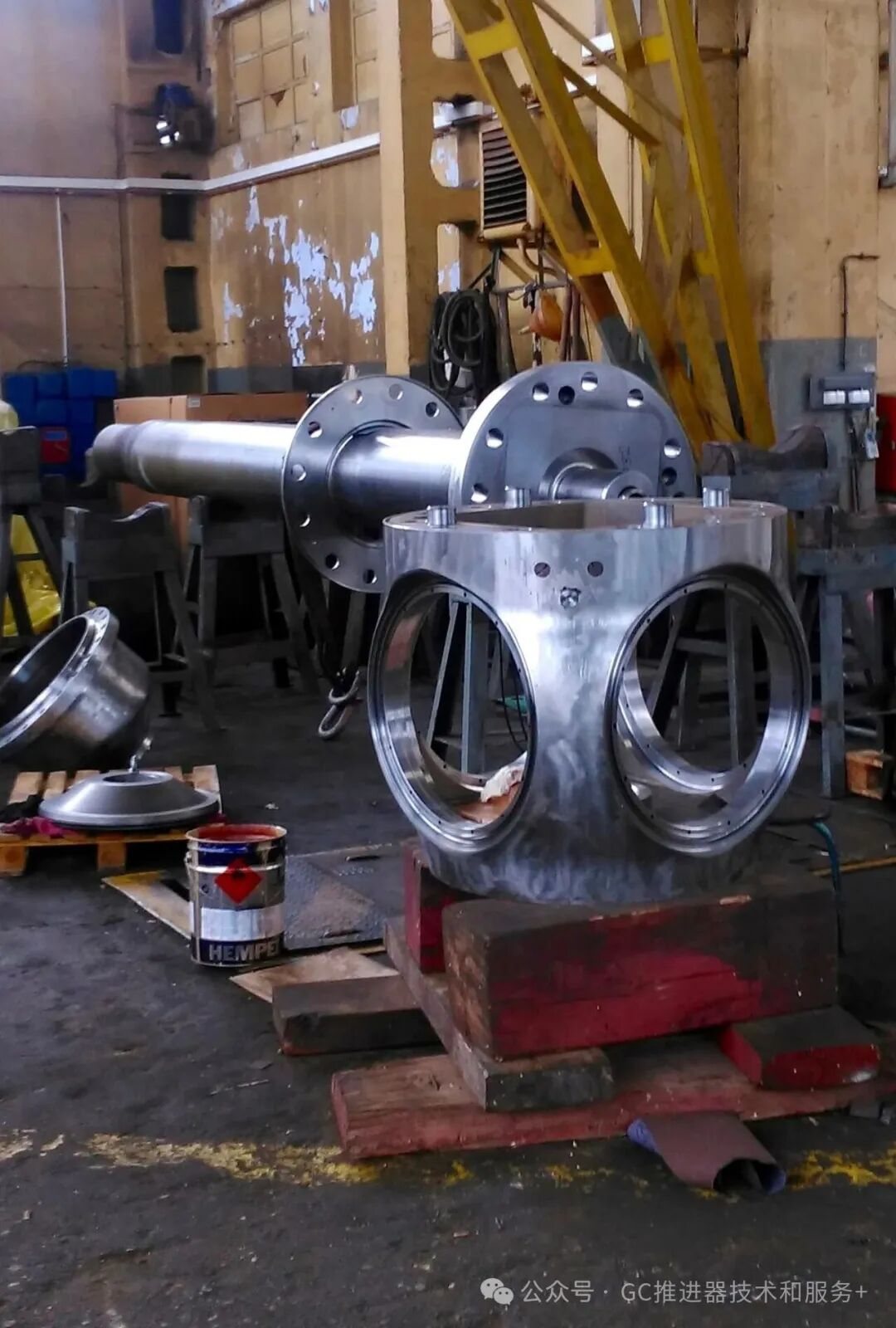
Stern tube and shaft components before assembly 装配前的艉管与轴系部件