
I. Where the work was done
These photographs were taken during an overhaul of the steering gear, carried out in the steering gear room with the unit in place on board. That is a different job from a workshop overhaul. The actuator sits between its hydraulic power pack and the control panel, with the piping that serves it running through the compartment, so the work is organised around what cannot be moved: the deck below the unit is cleared and protected, the lifting gear is hung from the deckhead, and the pipe joints that have to be broken are blanked and tagged before anything is opened.
Working in the vessel also means dealing with the condition the crew has been living with rather than a cleaned-up unit on a bench. Oil at the cover joint, a casing that has been painted over the fasteners, a rudder angle indication that no longer agrees with the command — these are found here, not after the unit is ashore.
II. Lifting the top cover
The cover is unbolted and lifted on its own lifting points, square and level, and set down on timber clear of the working area. Its underside is a machined face that carries part of the sealing arrangement, so it does not go down on the deck plate and nothing is laid on it.
With the cover off, the rotor, the stator and the sealing strips that separate the pressure sides are exposed. Everything that decides the result of the job is now visible and nothing has yet been cleaned, which is the state the inspection needs.
III. What the inspection is looking for
Three things decide the outcome.
Sealing strips. A strip that has hardened, taken a permanent set or worn at its edge will pass oil from the pressure side to the return side. The gear then loses its ability to hold the rudder against a load long before any oil appears on the outside, which is why an internal leak is found by testing rather than by looking for drips.
Sliding and sealing faces. Scoring, pick-up or a polished band on a machined face is read before anything is wiped down. A marked face is dressed or the component is renewed; a new strip running on a marked face fails in the same place it did before.
Rudder stock and bearing seal. At the lower end the stock runs through its bearing with a lip seal and a retaining ring. The stock surface under the lip is checked at the same time, because a seal renewed on a scored stock leaks again as soon as the gear is loaded.
IV. Reassembly, bleeding and the rudder angle check
Reassembly is the strip-down in reverse, with every seal, O-ring and gasket renewed as a set rather than part by part, the cover set down on its dowels, and the fasteners brought up in stages across the cover so the joint closes evenly.
The circuit is then filled and bled. Air left in a hydraulic circuit shows up as a soft response at the rudder and as pressure that will not hold; it is removed before the gear is judged.
The rudder angle indication is checked at the same time: the mechanical indicator on the unit and the repeater at the control position are compared through the full travel, port and starboard, and the feedback is set so the two agree.
V. What decides the interval to the next overhaul
Doing the work in the steering gear room avoids the lifting, the transport and the re-alignment that come with taking the unit ashore, and it is done in the time the vessel is alongside. Its limit is the machine shop: a sliding face that has to be ground, or a component that has to be bored, cannot be dealt with on board and the unit has to come out.
The parts that set the interval are the sealing strips and the faces they run on. Renewing them as a set, with the stock and the bearing seal checked at the same time, is what holds the interval; renewing the one strip that has started to pass oil only moves the next failure a little further out.
Photographs
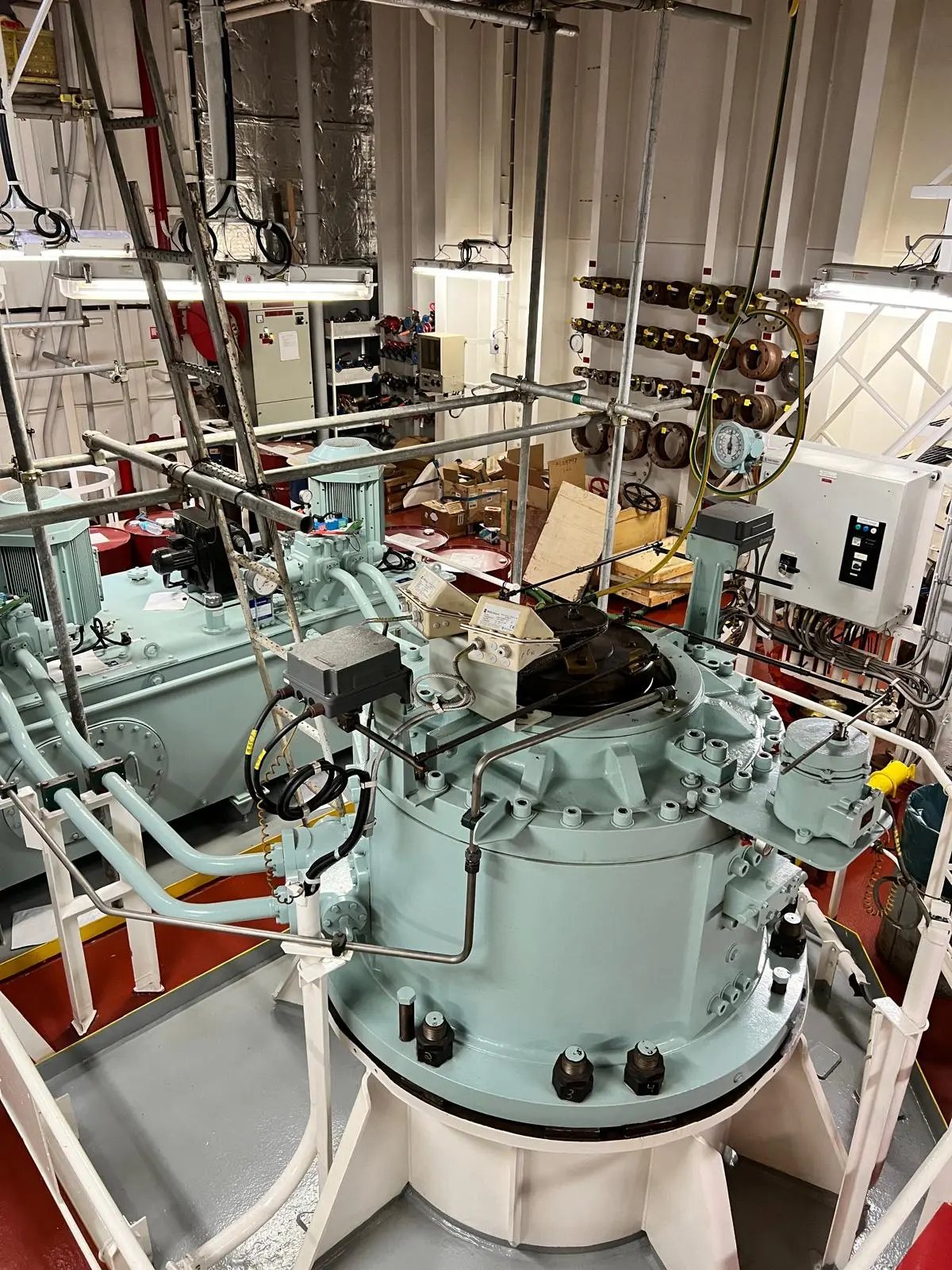
Actuator, power pack and control panel in the steering gear room 舵机间内的舵机本体、液压泵组与控制箱
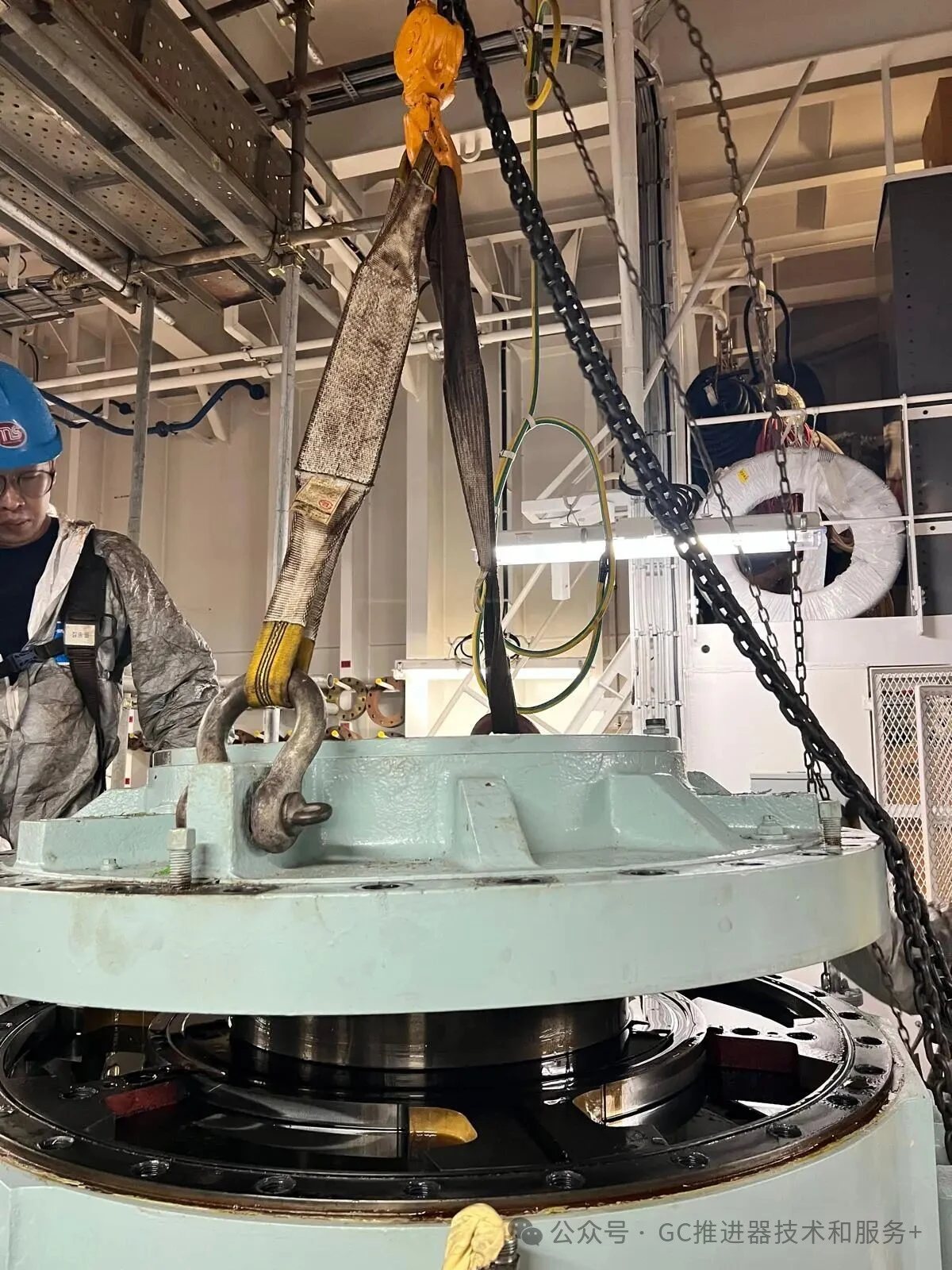
Top cover lifted clear, rotor and sealing strips exposed 吊开顶盖后露出的转子与密封条
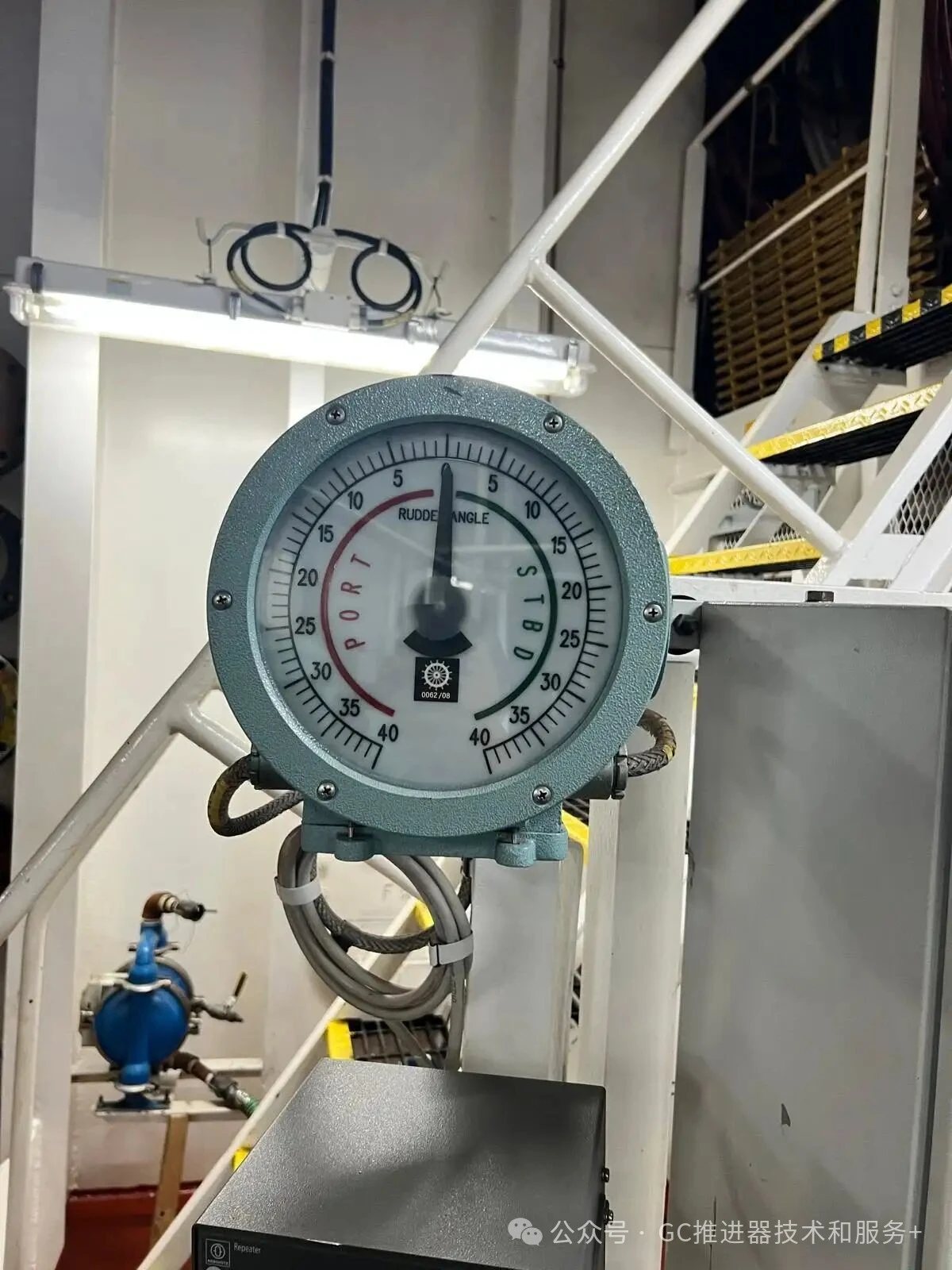
Rudder angle indicator checked against the control position repeater 舵角指示器与控制位复显器核对
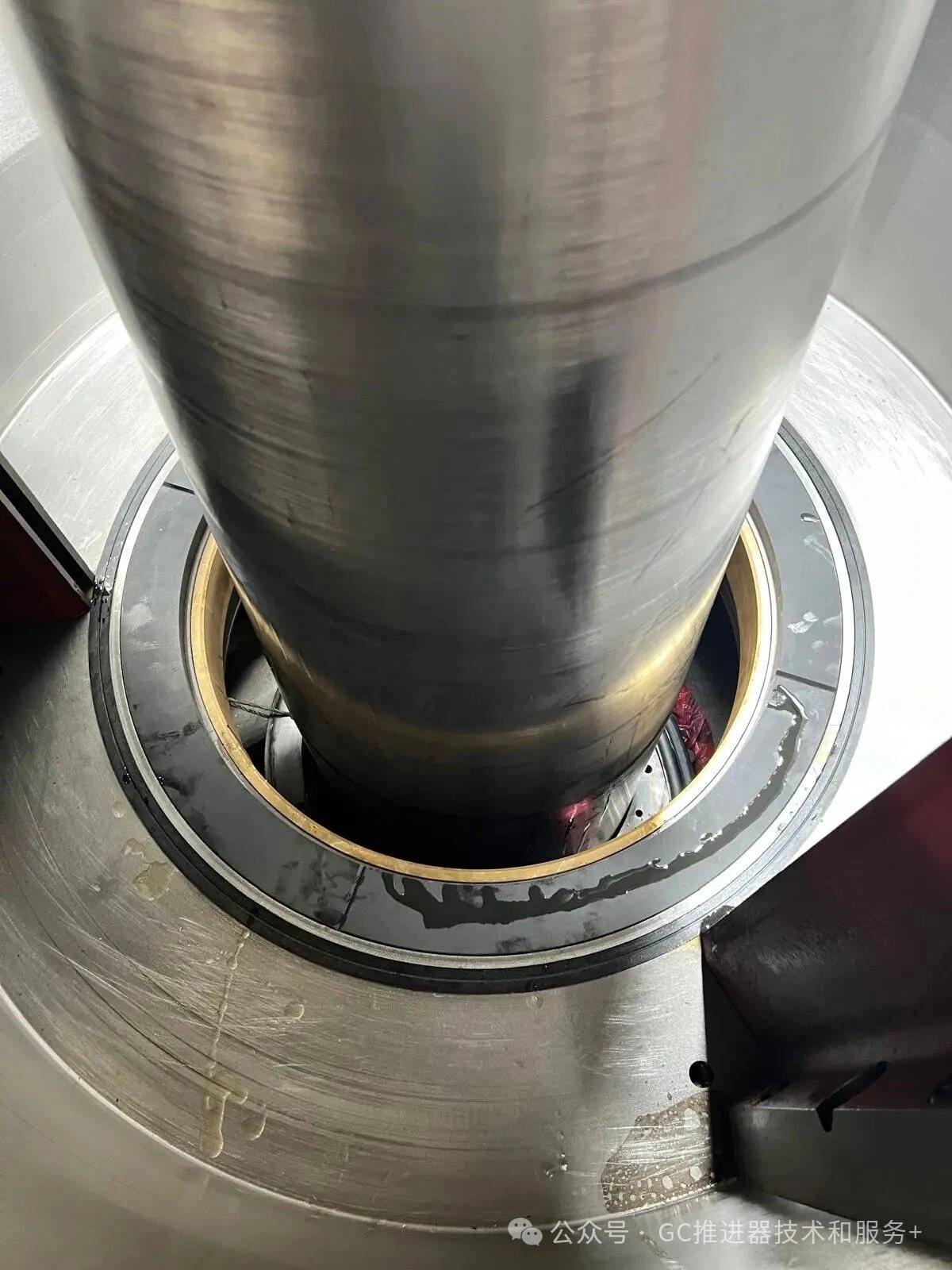
Rudder stock and bearing seal at the lower end 舵杆与下部舵承密封