
I. Two seal groups, two different jobs
Position. The sea-side seal sits at the outboard end of the assembly, next to the propeller, in direct contact with sea water. The inboard seal sits at the engine room end, inside the hull, on the oil side of the tube.
Function. The sea-side set is the first line: it keeps sea water, silt and sand out of the oil space. The inboard set keeps lubricating oil from escaping into the bilge or to sea, and acts as the standby barrier that limits how much oil can leave if the sea-side set fails.
What they see. The sea-side seal runs against sea water, silt and marine growth, under sea water pressure plus propeller-induced pulses. The inboard seal runs against tube oil, with only minor sea water seepage and no silt loading.
Design emphasis. The sea-side set is multiple lips in series, in materials chosen for sea water and abrasion resistance. The inboard set is fewer lips, with the material chosen for oil resistance, and the whole emphasis on controlling oil loss.
Consequence of failure. If the sea-side seal fails, sea water enters the tube, dilutes and contaminates the oil and corrodes the sleeve and the stern bearing; in a bad case the bearing is wiped. If the inboard seal fails, oil goes to sea, which is a pollution incident and a Port State matter, and a large loss leaves the tube short of oil.
II. Before anything is opened
The vessel is in dock, the dock is dry, the propeller is off and the tube oil has been drained in advance. Pressure alarms and leak monitoring lines are isolated before the assembly is disturbed, so that a sensor is not damaged and an alarm is not triggered during the work.
Everything is marked before it comes apart: flanges, glands, distance rings, the seal components themselves. A multi-stage seal stack that goes back together in the wrong order will leak, and it will leak in a way that looks like a failed seal rather than an assembly error.
The sleeve is checked first. If the running surface under the lip is scored, grooved or pitted, renewing the seal rings alone will produce a leak within weeks. A marked sleeve is polished or replaced.
The working area is sheeted. Sand, grit and metal swarf falling into an open seal cavity is one of the most common causes of a seal that fails soon after a renewal.
III. Fitting the rings — where it goes wrong
Lip direction. This is the first thing to get right and the first thing to get wrong. The sea-side seal has its lip facing outwards, towards the propeller and the sea, to keep water out. The inboard seal has its lip facing inwards, towards the oil space, to keep oil in. A lip fitted the wrong way round does not seal at all.
Ring condition. Every new ring is inspected before fitting: no cracks, no missing rubber, no scores. The lip is lubricated with the medium the maker specifies, and no sharp tool is allowed to touch it.
Gland bolts. The gland is tightened in diagonal steps, evenly, and never pulled down on one side first. Uneven tightening cocks the seal ring, and a cocked ring wears on one side and leaks on the other. Torque follows the maker's manual, and the figures differ between Kamewa, Schottel and the rest.
Spacers and shims. Distance rings, gaskets and retaining rings go in the order shown on the drawing. A gasket left out or put in the wrong place changes the stack height and with it the lip position.
IV. Tests in dock
The tube is filled with oil to the specified level and pressure, and the leak alarm sensors are tested to confirm they actually work — a sensor that has never been tested is not a barrier.
The shaft is turned on the turning gear and the seals are checked for abnormal friction, heat and weeping at the faces.
V. In service
Tube oil level and the leak collection tank are checked on a regular round, and the leak rate is recorded as a trend rather than as a yes or no. Silt-heavy waters accelerate wear on the sea-side seal, and in those trades the inspection interval is shortened.
Oil samples are taken and tested for water content. A small amount of water in the sample is the earliest sign that the sea-side seal is passing, and it is visible long before there is oil in the wake.
One rule matters more than the rest: the propeller is not run out of the water for any length of time. A lip running dry on a sleeve will burn in minutes, and the seal that was healthy before the manoeuvre is destroyed by it.
VI. The failures that repeat
Metal burrs and swarf cutting a lip during assembly, followed by a steady weep from the day the vessel sails.
A scored sleeve cutting a new seal in a short time, because the sleeve was not checked before the rings went on.
Uneven bolt loading cocking the seal, producing fast local wear on one side.
A lip fitted the wrong way round, which does not leak at first because the stack still holds, and then fails once the unit is under working pressure.
Photographs
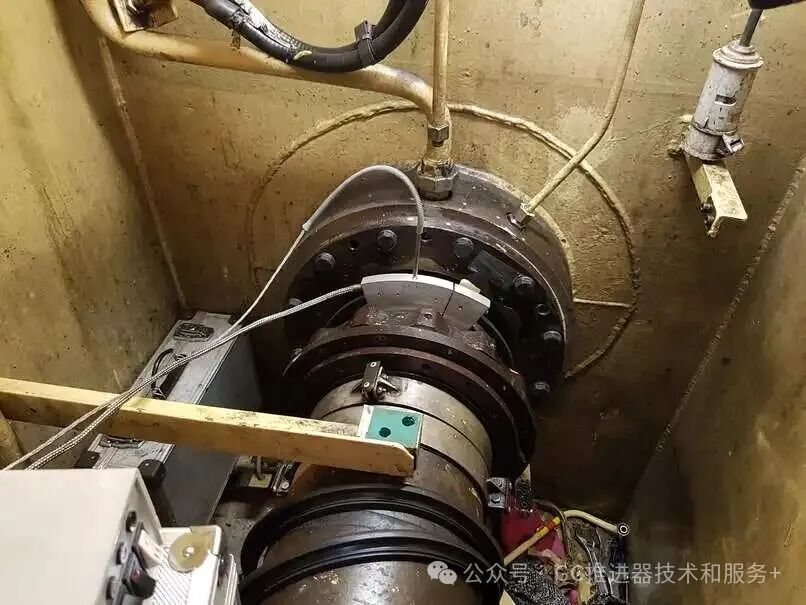
Stern tube seal stack exposed in dock 坞内拆出的艉轴管密封组
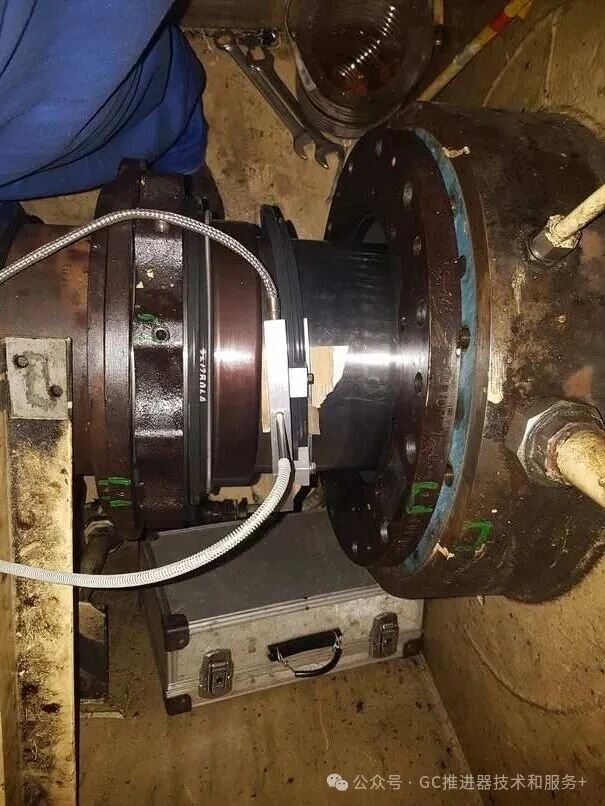
Seal assembly on the shaft 轴上的密封总成
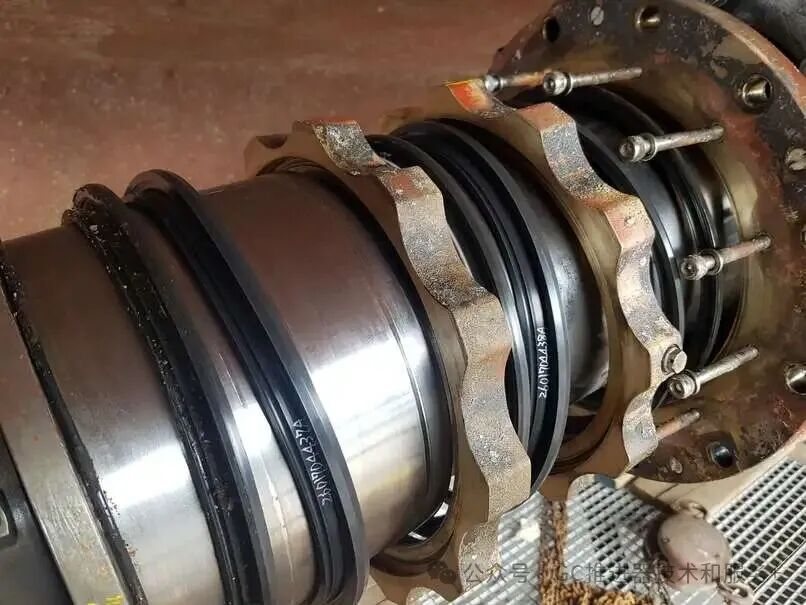
Sea-side and inboard rings laid out 海侧与舱内侧密封环
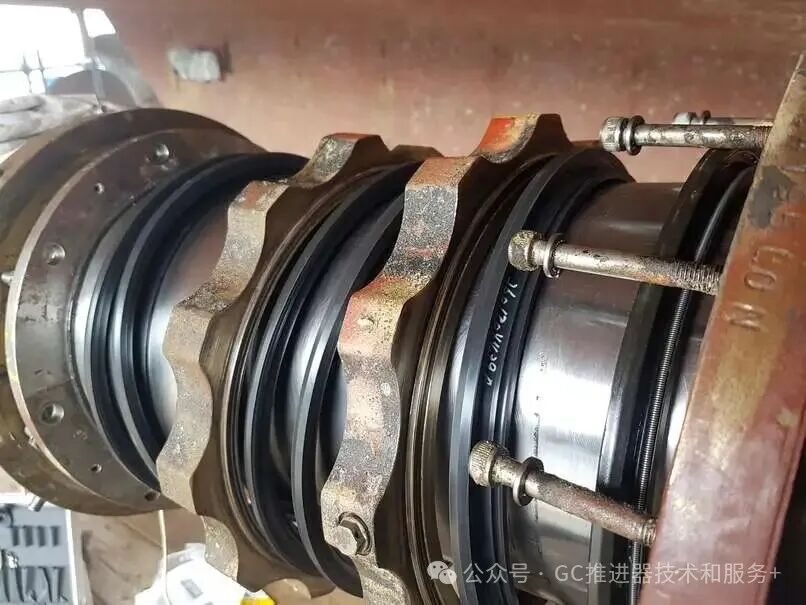
Seal faces checked before reassembly 回装前检查的密封面